The Power of Community Composting: Healthier Food, Cleaner Air, Stronger Neighborhoods
- taraashleybryan
- Jun 26, 2025
- 2 min read
Compost: The Secret to Nutrient-Rich Produce for Your Family
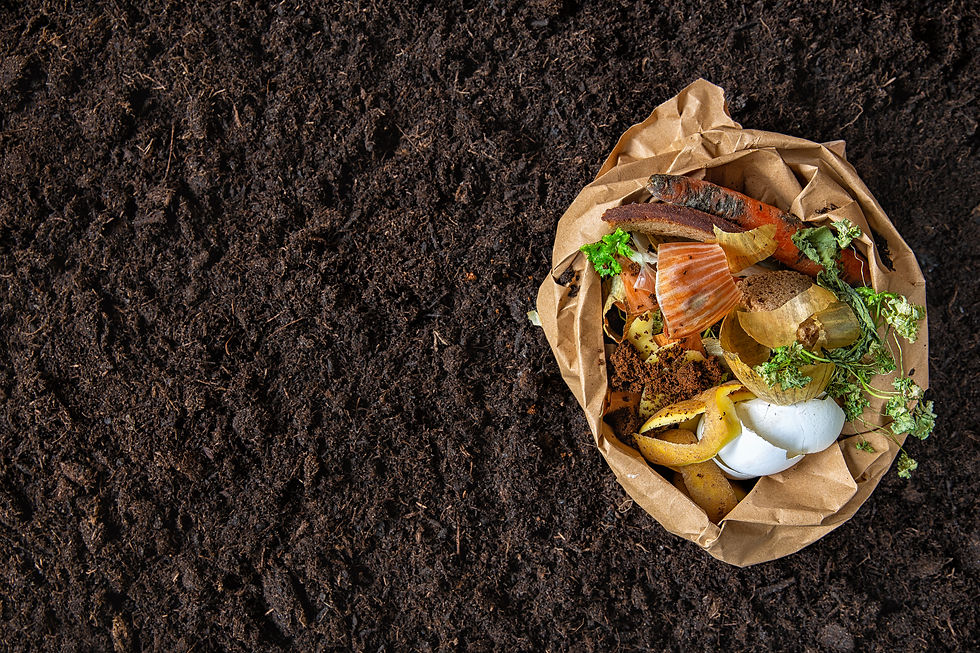
Did you know that veggies grown in compost-enriched soil aren’t just bigger—they’re better for you? A five-year study in Manitoba showed that using compost from food scraps boosted amino acids in vegetables by up to 323% and organic acids by 35%. Carrots grown in high-quality compost had more antioxidants and richer color. That’s a big win for your taste buds and your health!
Community composting programs deliver this nutrient-rich “black gold” to local gardens and urban farms. Gardens using local compost often yield 30–40% more produce than those using standard soil amendments. That means more fresh, healthy food—especially important in areas fighting food insecurity and chronic disease.
Cleaner Air, Healthier People
Composting doesn’t just feed the soil—it helps clean the air. By composting food scraps and yard waste instead of sending them to landfills, we cut methane emissions, a powerful greenhouse gas. Local composting also means fewer garbage trucks on the road, reducing air pollution in our neighborhoods.
Compost-amended soils help green spaces thrive, and those healthy plants act as natural air filters. Parks and gardens with compost-rich soil have less dust and fewer airborne particles, leading to fewer respiratory problems. Plus, healthy soil helps lock away carbon, making our communities part of the climate solution!
How Restaurants, Grocers, and Residents Can Help
Community composting is a team effort. Local restaurants and grocery stores can partner with composting programs to divert organic waste, saving up to 30% on waste management costs and supporting local food systems. Residents can join in by separating food scraps at home and dropping them off at community sites or subscribing to curbside pickup.
When everyone pitches in, we create a closed-loop system: food scraps become compost, compost grows healthier food, and that food nourishes the community. It’s a cycle that builds connections—78% of people in composting programs report stronger neighborhood ties.
Real-World Results: Healthier Communities
Cities with robust composting and urban agriculture programs often see lower rates of chronic disease. Access to fresh, nutrient-dense produce is linked to reduced risk of obesity, diabetes, and cardiovascular issues. Community gardens fueled by local compost help fill the gap in “food deserts,” giving everyone a shot at better health.
Join the Compost Revolution!
Whether you’re a chef, a grocer, or just someone who wants to make a difference, community composting is your ticket to a healthier, greener, and more connected neighborhood. Let’s turn our scraps into something spectacular—because when we compost together, we all grow stronger!
Comments